Emergency Contact for Victims of Crime: 202-467-8700/info@victimsofcrime.org
Community Stories

Stories that deserve to be heard
We value the stories our community shares and wish to present their experiences to the world and let others know they're not alone.
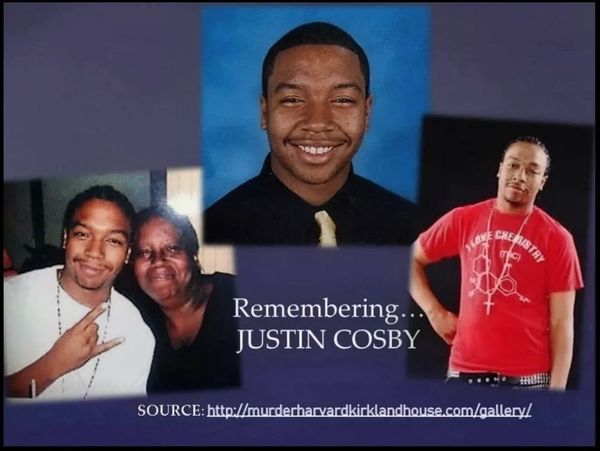
When Tragedy Becomes a Mission: Denise Cosby’s Journey from Grief to Advocacy by yuuri Moses
we are pleased to announce our first community story!
When a woman discovers she is pregnant, she often begins imagining the life that lies ahead. She thinks about who her child will become, what dreams they will pursue, and what kind of future they might have. Bringing a child into the world is an act of hope. A mother gives life while imagining that, one day, she will watch her child grow, find their purpose, and build a life of their own. No mother expects that one day she might have to read about the death of her own child or hear about it through television and media accounts.
For Denise Cosby, that unimaginable reality became her life when her 21-year-old son, Justin Cosby, was fatally shot inside Harvard University's Kirkland House on May 18, 2009. The loss of a child is not a wound that can simply be treated and healed. A physical injury may eventually close, a scar may fade, and pain may lessen with time. But the loss of a child can leave an emotional and psychological wound that a person carries for the rest of their life. And when that loss becomes a public story, when a mother must see her child's death described in newspapers, on television, and across the media, the grief can become even more complicated. Denise did not only have to mourn her son. She had to watch the world learn about Justin as the news was headlined in a bulletin that flashed across her television screen, not knowing at first that it was her son, followed by accounts of the circumstances surrounding his death.
But Justin was more than the circumstances of his death. He was a son. He was a young man with a life, hopes, relationships, and a future that his family believed was still ahead of him. That is where Denise Cosby's story begins, not simply with a murder, but with a mother's experience of losing the future she imagined for her child. Her memoir, Murder at Harvard's Kirkland House – A Mother's Worst Nightmare, tells the story of that loss, the long journey through the legal system that followed, and the transformation that came afterward. Because Denise's story is not only about what happened to Justin. It is also about what happens to the people left behind.
Beyond the Headlines
When a tragedy becomes news, the people at the center of it can sometimes become secondary to the story itself. Headlines tell us what happened, where it happened, and who was involved. For those reading the news, the story may be shocking. We may stop, read the article, talk about it with someone, and feel sadness or disbelief. Then another story appears. Another headline takes its place. Another event captures our attention. Eventually, the details of yesterday's tragedy begin to fade from public memory. News moves quickly, and even stories that once dominated the headlines can eventually disappear from everyday conversation.
For many people who read about a tragedy, the emotional impact may last for a moment, a day, or perhaps a little longer. But for the family who lost someone, there is no next headline that replaces the one they are living with. For Denise, Justin was never simply a headline. He was her son. The world could eventually move on to another story, but Denise could not simply move on from losing her child. The news cycle ends. The newspaper is put away. The television moves to another story. People return to their everyday lives. A mother still has an empty space at the table. She still remembers the voice of her child. She still carries the memories. And she still lives with the reality that the future she imagined for her son will never happen. That is one of the unseen dimensions of tragedy. The public sees the event, the family lives with the aftermath. The pain of losing a child is not always visible. There may be no physical wound that others can see, no bandage that can be removed, and no moment when someone can simply say that the healing is complete. The emotional and psychological pain can continue long after the headlines have disappeared.
Denise's memoir takes readers beyond the initial news reports and into that lasting after math. It explores the grief, confusion, media attention, and difficult questions that followed Justin's death. It also documents her long journey through the legal system as she navigated court proceedings over the following two and a half years. The case eventually resulted in convictions and a life sentence for Jabrai Copney, along with convictions involving others connected to the case. But justice in a courtroom and healing in a family are not the same thing. A verdict can bring a legal conclusion to a case. It cannot bring a child back. And when the rest of the world has stopped talking about the tragedy, the family continues to live with the person who is missing. That is why Denise chose to tell her story.
Why Stories Matter
At Just-In-Time, storytelling can be more than simply telling people what happened. Stories can create opportunities for people to pause, listen, remember, and engage with issues that might otherwise be overlooked. Denise’s story demonstrates the power of continuing a conversation after the headlines have disappeared. Justin’s life cannot be reduced to the circumstances of his death. And Denise’s life cannot be reduced to the tragedy she experienced. Her journey is also a story of resilience, advocacy, and purpose. Through her writing and community engagement, Denise continues to use her experience to encourage conversations about how individual decisions can affect families and communities for years to come.
Remembering Justin
More than a decade after Justin’s death, his story continues through the people who remember him and through the work Denise has built from her experience. Murder at Harvard’s Kirkland House, A Mother’s Worst Nightmare invites readers into a mother’s experience of unimaginable loss, but it also asks readers to consider what can come after tragedy.
There is grief.
There is justice.
There are questions that may never have easy answers.
And there is the possibility of transforming personal pain into something that can help others.
Perhaps one of the deepest changes in Denise’s journey was a change in what she hoped for. Before Justin’s death, her hopes were the hopes of a mother: to see her son alive, to watch him grow, discover his purpose, and build his future. After his death, she could no longer change what had happened to Justin. But her purpose did not have to end with her loss. Her thinking began to move from How can I protect my son? to a much larger question: How can we protect other people's sons and daughters?
She could not bring Justin back. She could not rewrite the day that changed her family forever. But she could use her experience to speak about violence, raise awareness, connect with others who have experienced similar loss, and encourage communities to think about prevention. In that sense, telling Justin’s story becomes more than remembering the past. It becomes an attempt to change what happens in the future. Because for Denise, the ultimate hope is not simply that Justin will be remembered.
It is that fewer families will ever have to experience what hers experienced. That is where grief can become a mission, not because the pain disappears, but because the person carrying it chooses to use their voice to help protect others. Justin’s life should be remembered for more than the way it ended. And Denise's story reminds us that when one family speaks about its pain, it can create a conversation large enough for an entire community to hear.
Author: Yuuri Moses:
Yuuri Moses is a Master of Public Administration (MPA) student at Fairleigh Dickinson University, concentrating in Global Affairs. She has a passion for philosophy, critical thinking, and exploring the deeper questions that shape human understanding and society. She is interested in examining ideas from different perspectives, challenging conventional assumptions, and seeking meaning through thoughtful reflection and intellectual curiosity.
Este sitio web utiliza cookies
Usamos cookies para analizar el tráfico del sitio web y optimizar tu experiencia en el sitio. Al aceptar nuestro uso de cookies, tus datos se agruparán con los datos de todos los demás usuarios.